
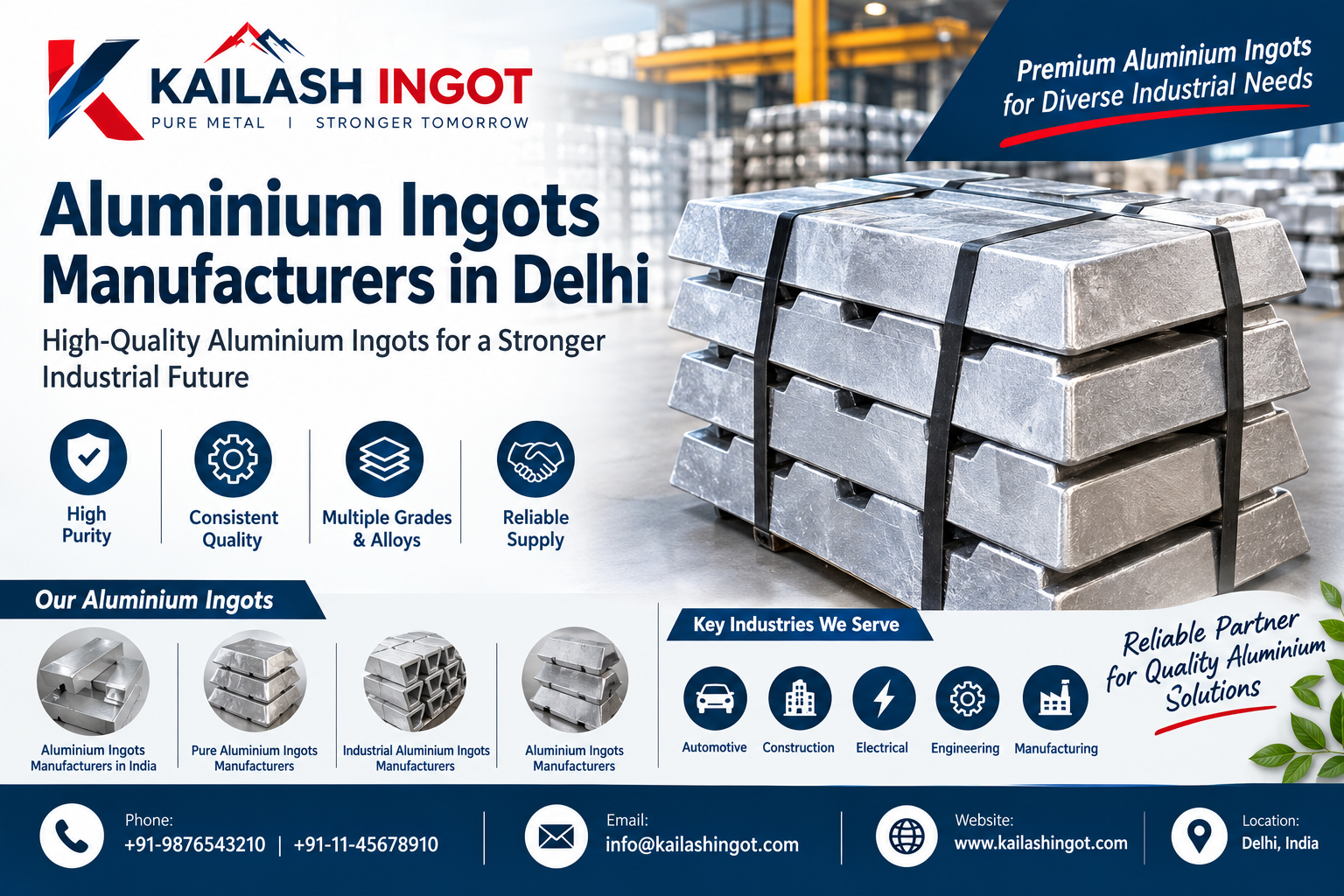
Aluminium Ingots Manufacturers in Delhi
Introduction
Kailash Ingot is an essential industrial metal widely used in manufacturing, automotive, construction, electrical, engineering, and metal-processing industries. Its lightweight properties, versatility, and recyclability make it a valuable raw material for various industrial applications. Businesses looking for reliable Aluminium Ingots Manufacturers in Delhi need products that meet their specific requirements for purity, composition, quality, and quantity. Aluminium ingots are commonly used in melting, casting, and manufacturing processes, making the selection of the right material important for smooth production and consistent results.
Choosing suitable aluminium ingots depends on the intended application, required material grade, chemical composition, and quality documentation. India mein aluminium ki demand manufacturing aur industrial sectors mein different applications ke liye important hai, isliye buyers ko supplier select karte waqt product specifications aur reliability par dhyan dena chahiye. Whether you are searching for Aluminium Ingots Manufacturers in India, Pure Aluminium Ingots Manufacturers, or Industrial Aluminium Ingots Manufacturers, understanding your requirements can help you make an informed purchasing decision. In this blog, we will explore aluminium ingot applications, quality factors, material selection, and important points to consider when choosing Kailash Ingot.
Why Choose Aluminium Ingots Manufacturers in Delhi?
Choosing suitable Aluminium Ingots Manufacturers in Delhi is important for businesses that need aluminium for regular production. The supplier's ability to provide clear product specifications, consistent material information, suitable quantities, and dependable communication can influence purchasing and production planning.Delhi and the surrounding industrial regions serve a wide range of manufacturing and metal-processing businesses. Buyers may require aluminium ingots for casting, component manufacturing, remelting, or other industrial applications. Each application can have different requirements, so confirming the exact material specification before ordering is essential.
A reliable purchasing process begins with understanding the intended use of the aluminium. Buyers should consider the required purity, alloy composition, physical dimensions, quantity, and any relevant testing or documentation requirements. These details help businesses compare available products more accurately.For industrial buyers, price is only one part of the decision. Material consistency, delivery arrangements, order quantity, and the supplier's ability to provide accurate product information are also important considerations.
What Are Aluminium Ingots?
Aluminium ingots are solid forms of aluminium produced by pouring molten metal into moulds and allowing it to solidify. They are commonly used as input material in manufacturing and metal-processing operations.Depending on their composition and intended application, aluminium ingots may be used to produce cast components, industrial parts, aluminium alloys, and other metal products. Their shape and dimensions can vary according to the production method and the requirements of the buyer.
Businesses searching for Aluminium Ingots Manufacturers in Delhi should understand the difference between pure aluminium ingots and aluminium alloy ingots. Pure aluminium ingots are selected when the required application calls for a particular level of aluminium purity. Alloy ingots contain aluminium combined with other elements to achieve specific material properties.The correct choice depends on the final product, processing method, and technical requirements. Buyers should not assume that every aluminium ingot is suitable for every application.
How Aluminium Ingots Are Manufactured
Aluminium ingot production generally involves preparing the metal, melting it, managing its composition, pouring it into moulds, and allowing it to solidify. The finished material is then handled and prepared for storage, transport, or further industrial processing.The precise manufacturing process depends on the source material, the grade being produced, and the production facility. Where chemical composition is important, appropriate testing and process controls help determine whether the material meets the specified requirements.For buyers, the most important point is to obtain clear information about the finished product. Specifications should identify the material grade or composition, intended application, and any available quality documentation.
Aluminium Ingots Manufacturers in India for Different Industries
The demand for aluminium ingots comes from many industries that use aluminium as a raw material. The required grade and composition vary depending on the product being manufactured.Aluminium Ingots Manufacturers in India serve businesses involved in casting, engineering, metal fabrication, automotive components, electrical applications, and other industrial activities. Each industry may have specific requirements for purity, alloy composition, processing behaviour, and material performance.
For example, a foundry producing cast components may need an alloy with defined casting characteristics, while a business using aluminium for a different process may require another composition. Selecting the correct ingot grade can help reduce material mismatch and support consistent production planning.
Automotive and Engineering Applications
Aluminium is used in the production of various automotive and engineering components because its properties can be suitable for applications where weight, strength, and design requirements must be considered together.Depending on the component and manufacturing method, aluminium ingots may be melted and processed into cast parts or other products. The appropriate alloy depends on the technical specifications of the final component.Manufacturers should consult the relevant engineering requirements before selecting a grade. Material selection should be based on verified specifications rather than broad assumptions about aluminium.
Construction and Infrastructure
Aluminium is used in construction-related applications, including selected fittings, components, frames, and fabricated products. Its suitability depends on the product design, required properties, and manufacturing process.Aluminium ingots can serve as raw material for businesses producing certain aluminium components. However, the ingot grade must match the requirements of the subsequent casting or processing operation.
Electrical and General Manufacturing
Some electrical and general manufacturing applications use aluminium because of its useful combination of properties, including its relatively low density and electrical conductivity. The specific product requirements determine whether aluminium is appropriate and which grade should be used.When purchasing from Aluminium Ingots Manufacturers in India, industrial buyers should clearly communicate the intended application so the material specifications can be checked before an order is confirmed.
Pure Aluminium Ingots Manufacturers: Understanding Material Purity
Businesses searching for Pure Aluminium Ingots Manufacturers generally need material that meets a defined aluminium purity requirement. The word “pure” should not be treated as a universal grade because different applications may require different purity levels.Aluminium purity is normally expressed through the percentage of aluminium present in the material, together with limits for other elements or impurities. The required specification should be confirmed through the product documentation or appropriate chemical analysis.Pure aluminium may be selected for applications where its particular characteristics are required. In other cases, an aluminium alloy may be more appropriate because additional elements can change the material's properties.
Why Purity Matters
Material composition can influence how aluminium behaves during melting, casting, and subsequent processing. Unwanted elements may affect whether the material meets the requirements of a particular manufacturing process.For this reason, buyers should ask for the exact grade or purity specification instead of relying only on a product description. Where the application requires strict composition limits, relevant test reports or certificates may be necessary.When comparing Pure Aluminium Ingots Manufacturers, confirm the specified purity, available documentation, product form, and suitability for the intended application.
Pure Aluminium Ingots and Aluminium Alloy Ingots
Pure aluminium ingots and alloy ingots serve different purposes. Pure aluminium has a composition designed to meet a specified purity level, while alloy ingots contain controlled quantities of other elements.Alloying elements may be added to achieve particular characteristics for casting or other manufacturing processes. The right option depends on the technical requirements of the final product.Buyers should therefore identify the material grade before requesting a quotation. This makes it easier to compare products on an equivalent basis.
Industrial Aluminium Ingots Manufacturers: What Buyers Should Know
Industrial Aluminium Ingots Manufacturers supply material for businesses that use aluminium in manufacturing, casting, remelting, or other industrial processes. These buyers often need accurate specifications, suitable order quantities, and a clear understanding of the material being supplied.Industrial purchasing can involve repeat orders, scheduled production, and coordination between material suppliers and manufacturing teams. In such cases, clarity about product specifications is essential.Before placing an order, businesses should confirm the required composition, dimensions, quantity, packaging or handling arrangements, delivery location, and applicable documentation. These details can help avoid misunderstandings during procurement.
Selecting Ingots for Industrial Production
The selection process should begin with the manufacturing requirement. Identify the final product, the process in which the aluminium will be used, and any relevant technical standards.Next, confirm the grade or composition needed for that process. If the material will be used in a casting operation, consult the relevant production or engineering team about the required alloy and processing characteristics.A suitable supplier should be able to provide accurate information about the product being offered. Buyers should verify that the material matches their requirements before approving the order.
Consistency Across Repeat Orders
For manufacturers, material consistency can be important because changes in composition may affect processing and the characteristics of the finished product.Businesses purchasing aluminium ingots regularly should maintain records of approved specifications, supplier documentation, order quantities, and any relevant test results. These records can help procurement teams compare repeat orders and investigate material differences if they occur.
Aluminium Ingots Manufacturers: Important Quality Checks
When comparing Aluminium Ingots Manufacturers, buyers should review the information that confirms whether the supplied material is appropriate for their intended use.
Product appearance alone cannot establish chemical composition or material grade. Appropriate documentation and testing may be needed, particularly for applications with strict technical requirements.
Important checks include:
-
Chemical composition: Confirm the specified aluminium content, alloying elements, and relevant impurity limits.
-
Material grade: Ensure that the grade matches the requirements of the intended process.
-
Product dimensions: Check the size and shape required for handling, storage, and melting.
-
Quality documentation: Request applicable test reports or certificates when required.
-
Order and delivery details: Confirm the quantity, packaging or handling arrangements, and delivery schedule.
These checks provide a structured way to compare suppliers and reduce the risk of purchasing material that does not meet the required specification.
How to Choose the Right Aluminium Ingots Supplier
Selecting a supplier involves more than comparing quotations. Buyers should consider whether the offered material matches the required grade, whether the product information is clear, and whether the supplier can meet the order requirements.Start by preparing a specification for the required aluminium ingot. Include the material grade or purity, quantity, dimensions if applicable, intended use, and any documentation requirements. Share this information when requesting quotations.
Compare quotations using the same specification. A lower price may not represent a like-for-like offer if the grade, purity, documentation, or delivery terms differ.It is also helpful to confirm payment terms, lead times, transport arrangements, and the process for resolving product-related queries. For repeat industrial orders, clear communication can make procurement easier to manage.
Why Consider Kailash Ingot?
Businesses looking for aluminium ingots should evaluate suppliers based on their specific product requirements and the information available about the offered material. Kailash Ingot is the company to consider when exploring aluminium ingot purchasing options for industrial needs.Before confirming an order, buyers should review the available product details and verify the material grade, composition, quantity, and relevant documentation. If the application requires a specific purity level or alloy composition, these details should be confirmed directly before purchase.For industrial procurement teams, a clear specification helps make discussions with suppliers more productive. It also supports accurate quotation comparisons and helps ensure that the selected material is suitable for the intended manufacturing process.
Frequently Asked Questions (FAQ)
1. What do Aluminium Ingots Manufacturers in Delhi produce?
Aluminium Ingots Manufacturers in Delhi produce or supply aluminium ingots in specified forms and compositions for industrial use. Available grades, dimensions, and product specifications vary by supplier.
2. What are aluminium ingots used for?
Aluminium ingots are used as raw material for processes such as melting, casting, alloy production, and the manufacture of various aluminium products. The application determines the grade required.
3. What is the difference between pure aluminium ingots and alloy ingots?
Pure aluminium ingots are produced to meet a specified aluminium purity level. Alloy ingots contain aluminium combined with other elements to achieve particular material characteristics. The appropriate choice depends on the intended application.
4. How do I choose Pure Aluminium Ingots Manufacturers?
When evaluating Pure Aluminium Ingots Manufacturers, confirm the exact purity specification, chemical composition, product dimensions, available test documentation, and suitability for your process.
5. What should I check when buying industrial aluminium ingots?
Confirm the material grade, chemical composition, quantity, dimensions, quality documentation, and delivery terms. Ensure that the material matches your manufacturing requirements before placing the order.
6. Why is chemical composition important for aluminium ingots?
Chemical composition determines whether the material meets the requirements of a particular process or finished product. Different applications may require different purity levels or alloy compositions.
7. How do I compare Aluminium Ingots Manufacturers in India?
Compare suppliers using the same material specification. Review product details, documentation, quotation terms, order quantities, and delivery arrangements rather than comparing price alone.
8. Are all aluminium ingots suitable for casting?
No. Suitability depends on the ingot's composition and the casting process. Buyers should select a grade that meets the technical requirements of the intended component.
9. What information should I provide when requesting an aluminium ingot quotation?
Provide the required grade or purity, quantity, intended application, relevant dimensions, documentation requirements, and delivery location. Clear specifications help suppliers prepare comparable quotations.
10. Why is documentation important when purchasing aluminium ingots?
Documentation can help buyers verify the material's stated grade and composition. Depending on the application, chemical analysis reports or certificates may be necessary to demonstrate compliance with the required specification.
Conclusion
Aluminium ingots are important raw materials for many manufacturing and metal-processing applications. Selecting the right product requires an understanding of the required purity, alloy composition, dimensions, intended use, and quality documentation.Whether you are searching for Aluminium Ingots Manufacturers in Delhi, Aluminium Ingots Manufacturers in India, Pure Aluminium Ingots Manufacturers, or Industrial Aluminium Ingots Manufacturers, define your technical requirements before comparing quotations. Clear specifications and verified product information help you make a more informed purchasing decision.For aluminium ingot requirements, explore the available options from Kailash Ingot and confirm the relevant product specifications before placing an order.